When it comes to choosing the right CRM, the battle between Salesforce vs HubSpot comparison often leaves businesses stunned. Both platforms dominate the market, but which one truly delivers more value? Let’s dive deep into the real differences that matter.
Salesforce vs HubSpot Comparison: Overview and Market Position

In the ongoing Salesforce vs HubSpot comparison, understanding the foundational differences in their market positioning is crucial. Salesforce has long been considered the gold standard in CRM technology, known for its robust enterprise-level capabilities. Meanwhile, HubSpot has carved out a niche as a user-friendly, all-in-one inbound marketing and sales platform, particularly popular among small to mid-sized businesses.

History and Evolution of Salesforce
Salesforce was founded in 1999 by Marc Benioff, Parker Harris, Dave Moellenhoff, and Frank Dominguez. It pioneered the concept of cloud-based CRM, eliminating the need for on-premise software installations. Over the years, Salesforce has expanded beyond CRM into marketing automation, customer service, analytics, and artificial intelligence through its Einstein platform.
- First major CRM to offer cloud-based solutions
- Acquired companies like Tableau, Slack, and MuleSoft to enhance ecosystem
- Consistently ranked #1 in Gartner’s Magic Quadrant for CRM
According to Salesforce’s official website, the company serves over 150,000 customers worldwide, including 80% of Fortune 100 companies.
History and Evolution of HubSpot
HubSpot was founded in 2006 by Brian Halligan and Dharmesh Shah with a mission to transform the way businesses grow. Unlike Salesforce, HubSpot started with inbound marketing as its core philosophy—focusing on attracting customers through content, SEO, and social media rather than interruptive advertising.
- Introduced the concept of inbound methodology
- Launched free CRM tool in 2014, disrupting the market
- Expanded into sales, service, CMS, and operations hubs
As stated on HubSpot’s About page, the platform now supports over 200,000 customers in more than 120 countries.
“HubSpot made CRM accessible to startups and SMBs, while Salesforce built the enterprise fortress.”
Salesforce vs HubSpot Comparison: Core Features and Functionality
When conducting a Salesforce vs HubSpot comparison, one of the most critical areas to evaluate is their core features. Both platforms offer CRM capabilities, but the depth, flexibility, and integration of tools vary significantly.
CRM Capabilities: Depth vs Simplicity
Salesforce offers one of the most comprehensive CRM systems available. Its Sales Cloud provides advanced lead and opportunity management, forecasting, pipeline analytics, and AI-driven insights via Einstein. Customization is nearly limitless, allowing businesses to tailor every field, workflow, and report.
In contrast, HubSpot’s CRM is designed for ease of use. It’s completely free at its base level and includes contact management, deal tracking, email tracking, and task automation. While not as deep as Salesforce, it’s intuitive and requires minimal setup.
- Salesforce: Highly customizable, ideal for complex sales cycles
- HubSpot: Streamlined interface, perfect for fast-moving teams
- Both support mobile access and third-party integrations
For organizations needing granular control over their sales process, Salesforce wins. For those prioritizing speed and simplicity, HubSpot is unmatched.
Marketing Automation Tools
In the Salesforce vs HubSpot comparison, marketing automation is where HubSpot truly shines. HubSpot Marketing Hub offers drag-and-drop email builders, landing page creation, blog publishing, SEO recommendations, social media scheduling, and detailed campaign analytics—all within a single interface.
Salesforce Marketing Cloud is powerful but complex. It’s built for large enterprises running global campaigns and includes journey builder, audience segmentation, and data studio. However, it requires significant training and often needs consultants to implement effectively.
- HubSpot: All-in-one marketing suite, beginner-friendly
- Salesforce: Enterprise-grade, highly scalable but steep learning curve
- HubSpot integrates natively with CRM; Salesforce requires configuration
According to HubSpot’s marketing product page, over 135,000 customers use its marketing tools daily. Meanwhile, Salesforce Marketing Cloud is used by brands like Coca-Cola and Toyota for large-scale digital campaigns.
Customer Service and Support Features
Salesforce Service Cloud is a leader in customer service solutions. It offers omnichannel support (email, chat, phone, social), AI-powered chatbots, knowledge base management, and field service lightning for dispatching technicians. Its case management system is highly customizable and integrates seamlessly with other Salesforce clouds.
HubSpot Service Hub provides ticketing, knowledge base, live chat, customer feedback tools, and automation for common support tasks. While not as robust as Service Cloud, it’s sufficient for most SMBs and integrates perfectly with the rest of the HubSpot ecosystem.
- Salesforce: Best for high-volume, multi-channel support teams
- HubSpot: Ideal for growing businesses wanting unified customer experience
- Both offer SLA management and customer satisfaction tracking
For a deeper look at service capabilities, visit Salesforce Service Cloud and HubSpot Service Hub.
Salesforce vs HubSpot Comparison: User Experience and Interface Design
One of the most noticeable differences in any Salesforce vs HubSpot comparison is the user experience. This factor can make or break adoption across teams, especially in organizations without dedicated IT support.
Dashboard and Navigation
Salesforce’s interface, while powerful, is often criticized for being cluttered and overwhelming. New users may struggle with the sheer number of menus, tabs, and customization options. However, with proper training and configuration, it can be optimized for specific roles.
HubSpot, on the other hand, features a clean, modern dashboard with intuitive navigation. The layout is consistent across all hubs (CRM, Marketing, Sales, Service), making it easy for users to switch between functions without relearning the system.
- Salesforce: Role-based dashboards, highly customizable
- HubSpot: Unified interface, minimal learning curve
- HubSpot uses visual cues and tooltips extensively
A study by G2 shows that HubSpot scores higher in ease of use (8.5/10) compared to Salesforce (7.9/10).
Customization and Flexibility
Salesforce excels in customization. Administrators can create custom objects, workflows, approval processes, and even develop apps using Lightning Web Components. This makes it ideal for businesses with unique processes or those operating in regulated industries.
HubSpot allows moderate customization through properties, pipelines, and workflows. While it doesn’t match Salesforce’s depth, it offers enough flexibility for most marketing and sales teams. Its visual workflow builder is particularly user-friendly.
salesforce vs hubspot comparison – Salesforce vs hubspot comparison menjadi aspek penting yang dibahas di sini.
- Salesforce: Requires admin expertise or developer resources
- HubSpot: Business users can customize without coding
- Both support API access for external integrations
“Salesforce gives you the keys to the kingdom—but you need a map. HubSpot hands you a guided tour.”
Salesforce vs HubSpot Comparison: Pricing and Value for Money
Pricing is a decisive factor in the Salesforce vs HubSpot comparison. The cost structures reflect their target audiences: Salesforce for enterprises, HubSpot for SMBs and mid-market companies.
Salesforce Pricing Structure
Salesforce offers multiple editions—Essentials, Professional, Enterprise, and Unlimited—each with increasing features and price points. For example:
- Essentials: $25/user/month (basic CRM)
- Professional: $75/user/month (customization, automation)
- Enterprise: $150/user/month (advanced analytics, API access)
- Unlimited: $300/user/month (24/7 support, sandbox environments)
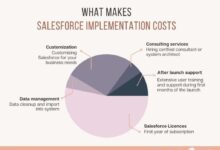
In addition, add-ons like Marketing Cloud, Service Cloud, and Einstein AI come at extra costs. Implementation and consulting fees can push total costs into tens of thousands of dollars.
More details can be found at Salesforce Pricing.
HubSpot Pricing Structure
HubSpot follows a tiered model across its hubs. The CRM is free forever, while paid tiers include:
- Starter: $20/month (basic tools for small teams)
- Professional: $800/month (marketing, sales, service hubs)
- Enterprise: $3,200/month (advanced automation, reporting)
Unlike Salesforce, HubSpot bundles features within each tier, making it easier to predict costs. However, prices are per hub, so using multiple hubs increases the total.
See HubSpot Pricing for full details.
Total Cost of Ownership (TCO)
When evaluating Salesforce vs HubSpot comparison, TCO goes beyond monthly fees. Consider:
- Implementation time and cost
- Training and onboarding
- Integration with existing tools
- Ongoing maintenance and upgrades
Salesforce typically has a higher TCO due to the need for consultants, developers, and administrators. HubSpot, with its self-service model, reduces these overheads significantly.
“You don’t pay just for the software—you pay for the complexity.”
Salesforce vs HubSpot Comparison: Integration and Ecosystem
The ability to connect with other tools is vital in any Salesforce vs HubSpot comparison. Both platforms offer extensive integration capabilities, but their approaches differ.
Native Integrations
Salesforce integrates natively with tools like Slack, Tableau, MuleSoft, and Microsoft Office 365. Its AppExchange marketplace hosts over 5,000 apps, allowing businesses to extend functionality without custom coding.
HubSpot offers native integrations with Gmail, Outlook, Zoom, Shopify, WordPress, and Facebook. Its integration ecosystem is smaller but highly focused on marketing, sales, and service tools.
- Salesforce: Broader enterprise integrations
- HubSpot: Marketing-centric, easy setup
- Both support single sign-on (SSO) and OAuth
Explore Salesforce AppExchange and HubSpot Integrations for more.
API Access and Developer Tools
Salesforce provides robust APIs (REST, SOAP, Bulk) and development tools like Salesforce DX, Heroku, and Lightning Platform. This makes it a favorite among developers building custom enterprise applications.
HubSpot offers a well-documented REST API and webhooks, enabling developers to sync data and automate workflows. While not as extensive as Salesforce, it’s sufficient for most integration needs.
- Salesforce: Full-stack development environment
- HubSpot: API designed for marketers and light developers
- Both support real-time data syncing
Third-Party App Connectivity
In practice, both platforms connect well with popular tools like Google Workspace, Microsoft Dynamics, QuickBooks, and Zoom. However, Salesforce’s MuleSoft acquisition gives it an edge in complex, data-heavy integrations across legacy systems.
HubSpot’s focus on ease means most integrations are one-click or require minimal configuration, ideal for non-technical users.
Salesforce vs HubSpot Comparison: Scalability and Target Audience
Understanding who each platform is built for is essential in the Salesforce vs HubSpot comparison.
Enterprise Needs and Salesforce
Salesforce is designed for large organizations with complex sales cycles, global operations, and regulatory requirements. Its multi-currency, multi-language, and role-based security features make it ideal for enterprises.
- Supports thousands of users
- Highly secure with compliance certifications (GDPR, HIPAA, etc.)
- Used by Fortune 500 companies across industries
Its scalability is proven in sectors like finance, healthcare, and telecommunications.
SMB Growth and HubSpot
HubSpot is built for startups and growing businesses. Its free CRM lowers the entry barrier, and its tiered pricing allows gradual scaling as needs evolve.
- Perfect for inbound-focused companies
- Great for remote or distributed teams
- Strong community and academy for self-learning
Many startups begin with HubSpot and only migrate to Salesforce when they outgrow its capabilities.
salesforce vs hubspot comparison – Salesforce vs hubspot comparison menjadi aspek penting yang dibahas di sini.
“HubSpot grows with you; Salesforce assumes you’ve already grown.”
Salesforce vs HubSpot Comparison: Customer Support and Training Resources
No matter how powerful a platform is, support and training determine long-term success.
Customer Support Options
Salesforce offers phone, email, and online support, with response times varying by edition. Unlimited edition customers get 24/7 support, while lower tiers rely on online communities and case submissions.
HubSpot provides email and chat support for paid plans, with phone support available for Enterprise customers. Its help desk is known for quick response times and clear documentation.
- Salesforce: Enterprise-level support for top tiers
- HubSpot: Responsive, accessible for all users
- Both have extensive knowledge bases
Training and Certification Programs
Salesforce Trailhead is one of the most comprehensive learning platforms in tech. It offers interactive modules, badges, and certifications in administration, development, and architecture.
HubSpot Academy provides free courses in inbound marketing, sales, and CRM usage. Certifications are widely recognized and help users maximize platform value.
- Salesforce: Deep technical training
- HubSpot: Practical, role-based learning
- Both offer free certification paths
Visit Salesforce Trailhead and HubSpot Academy to explore.
Salesforce vs HubSpot Comparison: Real-World Use Cases and Industry Adoption
Looking at real-world applications helps clarify the Salesforce vs HubSpot comparison.
Industries Using Salesforce
Salesforce is widely adopted in:
- Financial Services: For client relationship management and compliance
- Healthcare: Patient engagement and telehealth coordination
- Manufacturing: Sales forecasting and supply chain integration
- Retail: Omnichannel customer experience management
Companies like Adidas, Toyota, and United Airlines rely on Salesforce for mission-critical operations.
Industries Using HubSpot
HubSpot is popular among:
- Technology Startups: For inbound lead generation
- Agencies: Managing client campaigns and reporting
- E-commerce: Integrating with Shopify and WooCommerce
- Education: Student recruitment and engagement
Brands like SurveyMonkey, ClassPass, and Wistia use HubSpot to scale their marketing and sales efforts.
“Salesforce runs the enterprise engine; HubSpot fuels the growth rocket.”
Which CRM is better for small businesses?
HubSpot is generally better for small businesses due to its free CRM, intuitive interface, and all-in-one marketing tools. It allows startups to launch quickly without heavy investment in training or consultants.
Can Salesforce and HubSpot be used together?
Yes, Salesforce and HubSpot can be integrated using tools like Zapier, Workato, or native connectors. Some companies use HubSpot for marketing and Salesforce for sales and service, syncing data between both platforms.
Is Salesforce worth the cost?
Salesforce is worth the cost for large organizations that need deep customization, scalability, and enterprise-grade security. For smaller teams, the complexity and price may outweigh the benefits.
Does HubSpot have AI features?
Yes, HubSpot includes AI-powered tools like content suggestions, email subject line optimization, and predictive lead scoring. While not as advanced as Salesforce Einstein, they are sufficient for most marketing and sales teams.
Which platform has better reporting?
Salesforce offers more advanced reporting with custom dashboards, real-time analytics, and AI insights. HubSpot provides user-friendly reports that are easier to understand but less customizable.
In the Salesforce vs HubSpot comparison, there’s no one-size-fits-all answer. Salesforce dominates in power, scalability, and enterprise features, making it ideal for large, complex organizations. HubSpot wins in ease of use, affordability, and inbound marketing integration, perfect for startups and growing businesses. Your choice should depend on your team size, budget, technical expertise, and long-term goals. Evaluate your needs honestly, take advantage of free trials, and choose the platform that aligns with your growth strategy.
salesforce vs hubspot comparison – Salesforce vs hubspot comparison menjadi aspek penting yang dibahas di sini.
Further Reading: