Thinking about adopting Salesforce but unsure what it really costs to implement? You’re not alone. The truth is, Salesforce implementation cost varies wildly—and understanding the full picture can save you thousands.
Salesforce Implementation Cost: What You Need to Know

When businesses consider adopting Salesforce, one of the first—and most critical—questions they ask is: How much will it cost to implement? Unlike off-the-shelf software, Salesforce is a highly customizable platform, which means its implementation cost isn’t a one-size-fits-all number. Instead, it depends on a wide range of factors including company size, complexity of business processes, data migration needs, customization requirements, and the level of user training required.


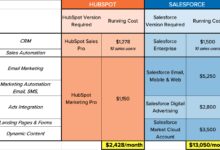
According to Salesforce’s official website, the platform offers various pricing tiers starting from $25 per user per month for the Essentials edition. However, this is just the license cost. The actual salesforce implementation cost can be 2 to 5 times higher than the annual license fees, depending on how deeply you integrate the system into your operations.
For small businesses, a basic Salesforce implementation might cost between $25,000 and $50,000. Mid-sized companies often spend $50,000 to $150,000, while large enterprises can easily exceed $500,000—sometimes even reaching into the millions when factoring in third-party integrations, custom development, and change management.
Why Salesforce Implementation Isn’t Just About Software
Many organizations mistakenly believe that Salesforce implementation cost is limited to subscription fees. In reality, the software license is only the tip of the iceberg. The real investment lies in configuring the platform to match your business workflows, migrating historical data, training employees, and ensuring long-term adoption.
Think of Salesforce as a powerful engine. The license gets you the engine, but implementation is the entire car—chassis, wheels, interior, and navigation system—all built around that engine to serve your specific needs.
Hidden Costs That Surprise Most Companies
Consulting Fees: Hiring a certified Salesforce partner or consultant can cost $150–$300 per hour.Data Migration: Cleaning, mapping, and transferring legacy data can take hundreds of hours.Custom Development: Building custom objects, workflows, or Apex code adds significant cost.User Training: Poor adoption due to lack of training leads to wasted investment..
Ongoing Maintenance: Annual support and updates are often overlooked in initial budgets.”The biggest mistake companies make is budgeting only for the license.The true cost of Salesforce is in the implementation and change management.” — Gartner Research, 2023
Factors That Influence Salesforce Implementation Cost
Understanding the variables that drive salesforce implementation cost is essential for accurate budgeting and project planning.No two implementations are identical, and the final price tag reflects the unique needs of each organization..
Company Size and Complexity
Small businesses with straightforward sales processes require less configuration and fewer integrations, leading to lower implementation costs. In contrast, large enterprises with multiple departments (sales, service, marketing, finance) using Salesforce across global regions face higher complexity.
For example, a multinational corporation may need separate orgs for different regions, complex sharing rules, multi-currency support, and integration with ERP systems like SAP or Oracle. These requirements dramatically increase both time and cost.
Number of Users and Editions
Salesforce offers several editions—Essentials, Professional, Enterprise, and Unlimited—each with different features and price points. The more users you have and the higher the edition, the greater the license cost, which indirectly affects implementation.
Additionally, more users mean more training, more data migration, and more change management effort. A company with 50 users will spend significantly more on implementation than one with 10, even if the per-user license cost scales linearly.
Customization and Integration Needs
One of Salesforce’s greatest strengths is its flexibility. However, this flexibility comes at a price. The more you customize the platform—adding custom objects, fields, workflows, approval processes, and automation—the higher the implementation cost.
Integrating Salesforce with existing systems like marketing automation (e.g., Marketo), customer support tools (e.g., Zendesk), or financial software (e.g., QuickBooks) also adds complexity. Each integration requires middleware (like MuleSoft, which Salesforce owns), API development, and rigorous testing.
For instance, a company using MuleSoft for enterprise integration can expect to pay an additional $50,000 to $200,000 in setup and licensing fees alone.
Breakdown of Salesforce Implementation Cost Components
To truly understand salesforce implementation cost, it’s crucial to break it down into its core components. This transparency helps avoid budget overruns and ensures stakeholders know where every dollar is going.
Licensing Costs
This is the most visible part of the cost. Salesforce licenses are priced per user per month. As of 2024, the pricing is roughly:
- Essentials: $25/user/month
- Professional: $75/user/month
- Enterprise: $150/user/month
- Unlimited: $300/user/month
For a company with 100 users on the Enterprise edition, annual license costs alone would be $180,000. But again, this is just the starting point.
Consulting and Professional Services
Most companies hire Salesforce consultants or implementation partners to ensure a smooth rollout. These experts handle configuration, data migration, testing, and training.
According to Capterra, the average hourly rate for a Salesforce consultant ranges from $150 to $300. A typical implementation project takes 3 to 6 months, with 200 to 1,000+ billable hours depending on scope.
For a mid-sized company, consulting fees alone can range from $40,000 to $120,000. Choosing a certified Salesforce partner (like Accenture, Deloitte, or a boutique firm) ensures quality but comes at a premium.
Data Migration and Cleanup
One of the most underestimated aspects of salesforce implementation cost is data migration. Moving data from legacy CRMs (like Microsoft Dynamics or HubSpot) into Salesforce isn’t just a copy-paste job.
Data must be cleaned, deduplicated, standardized, and mapped to the correct Salesforce fields. Poor data quality leads to inaccurate reports, failed automations, and user frustration.
On average, data migration costs between $5,000 and $30,000 for small to mid-sized businesses. Larger organizations with complex data structures may spend over $100,000 on this phase alone.
Custom Development and Automation Expenses
While Salesforce offers out-of-the-box functionality, most businesses need some level of custom development to align the platform with their unique processes. This is where salesforce implementation cost can escalate quickly.
Apex Code and Visualforce Pages
When standard Salesforce features don’t meet business needs, developers use Apex (Salesforce’s proprietary programming language) and Visualforce (for custom UIs) to build solutions. These require skilled developers, often commanding $100–$150/hour.
Examples include:
- Custom approval workflows for complex sales cycles
- Automated lead scoring based on behavioral data
- Integration with proprietary internal systems
A single Apex trigger or batch class can take 10–20 hours to develop and test. Multiply that across multiple customizations, and costs add up fast.
Process Builder and Flow Automation
Salesforce’s declarative tools like Process Builder and Flow allow non-developers to automate tasks. However, even these require configuration time and expertise.
Setting up end-to-end automation for lead-to-cash processes, service case escalation, or marketing campaign tracking can take dozens of hours. While less expensive than custom code, these still contribute to overall implementation cost.
Third-Party AppExchange Apps
The Salesforce AppExchange hosts thousands of apps that extend functionality. While many are free, premium apps come with subscription fees.
For example:
- DocuSign for Salesforce: $15/user/month
- RingCentral for Salesforce: $20/user/month
- FinancialForce Accounting: $100+/user/month
These add-ons improve functionality but increase both license and implementation costs, especially if they require integration work.
Training and Change Management Costs
Even the most perfectly configured Salesforce org will fail if users don’t adopt it. This is why training and change management are critical—and costly—parts of salesforce implementation cost.
User Training Programs
Effective training ensures users understand how to use Salesforce in their daily workflows. Options include:
- Live instructor-led sessions (in-person or virtual)
- On-demand video tutorials
- Role-based training (sales reps vs. service agents)
- Train-the-trainer programs
Costs vary, but a comprehensive training program for 100 users can range from $10,000 to $30,000. Platforms like Salesforce Trailhead offer free learning resources, but structured corporate training usually requires customization and facilitation.
Change Management Strategy
Implementing Salesforce often means changing how people work. Without proper change management, resistance can derail the project.
Best practices include:
- Executive sponsorship and communication
- Identifying and empowering internal champions
- Phased rollouts to minimize disruption
- Feedback loops and continuous improvement
Many organizations hire change management consultants, adding $15,000 to $50,000 to the total cost. But this investment pays off in higher user adoption and faster ROI.
salesforce implementation cost – Salesforce implementation cost menjadi aspek penting yang dibahas di sini.
Ongoing Maintenance and Support Costs
The implementation doesn’t end when Salesforce goes live. Ongoing maintenance is essential to keep the system running smoothly and adapting to business changes.
Annual Support and Upgrades
Salesforce releases three major updates per year (Spring, Summer, Winter). While these are included in the license, ensuring compatibility with custom code, integrations, and workflows requires testing and sometimes rework.
Companies typically budget 15–20% of the initial implementation cost annually for support, minor enhancements, and troubleshooting.
Dedicated Admin or Managed Services
Every Salesforce org needs at least one skilled administrator. Internal admins earn between $70,000 and $100,000/year in the U.S. Alternatively, companies can outsource to managed service providers for $2,000–$5,000/month.
These ongoing costs are often forgotten during initial budgeting but are crucial for long-term success.
How to Reduce Salesforce Implementation Cost
While salesforce implementation cost can be substantial, there are proven strategies to control and reduce expenses without sacrificing quality.
Start with a Clear Scope and Roadmap
One of the biggest causes of cost overruns is scope creep. Define clear objectives, prioritize must-have vs. nice-to-have features, and stick to the plan.
Use a phased approach: start with core CRM functionality (leads, accounts, opportunities), then add advanced features (marketing automation, CPQ) in later phases.
Leverage Salesforce’s Free Resources
Salesforce offers a wealth of free tools and learning materials:
- Trailhead: Free interactive learning platform
- Success Community: Peer support and best practices
- Lightning App Builder: Drag-and-drop customization
- Process Automation: No-code workflow tools
Using these can reduce dependency on expensive consultants for basic configurations.
Choose the Right Implementation Partner
Not all Salesforce partners are created equal. Evaluate partners based on:
- Industry experience
- Customer references
- Transparent pricing models (fixed-fee vs. hourly)
- Certifications and expertise
A good partner can save you money in the long run by avoiding costly mistakes and ensuring best practices.
Real-World Salesforce Implementation Cost Examples
To put theory into practice, let’s look at real-world examples of salesforce implementation cost across different business sizes.
Small Business: 10 Users, Basic CRM
Scenario: A boutique marketing agency wants to manage clients, leads, and projects.
- Licensing (Enterprise, 10 users): $18,000/year
- Consulting (3 months, $175/hour, 300 hours): $52,500
- Data migration: $7,000
- Training: $5,000
- AppExchange apps (DocuSign, Mailchimp): $3,000/year
- Total Initial Cost: ~$85,500
Mid-Sized Company: 100 Users, Sales & Service Cloud
Scenario: A regional manufacturer implementing Sales and Service Cloud with ERP integration.
- Licensing (Enterprise, 100 users): $180,000/year
- Consulting (6 months, $200/hour, 1,200 hours): $240,000
- Data migration: $25,000
- Custom development: $50,000
- Integration with SAP: $75,000
- Training and change management: $30,000
- AppExchange apps: $20,000/year
- Total Initial Cost: ~$620,000
Large Enterprise: 1,000 Users, Global Org with MuleSoft
Scenario: A multinational corporation with complex sales, service, and marketing needs.
- Licensing (Unlimited, 1,000 users): $3.6 million/year
- Consulting (Accenture-level partner, 12 months): $1.2 million
- Data migration: $150,000
- Custom development: $500,000
- MuleSoft integration: $400,000
- Training and change management: $200,000
- Ongoing managed services: $300,000/year
- Total Initial Cost: ~$6.4 million+
“We saved 30% on our Salesforce implementation by starting with a pilot program and avoiding over-customization.” — CIO, Mid-Sized Tech Firm
Common Mistakes That Increase Salesforce Implementation Cost
Even well-intentioned companies make mistakes that inflate salesforce implementation cost. Recognizing these pitfalls early can save time, money, and frustration.
Over-Customization
Many organizations fall into the trap of building too much custom functionality from day one. They ignore Salesforce’s standard features and jump straight to Apex code or complex workflows.
Result? Higher costs, longer timelines, and systems that are hard to maintain or upgrade.
Solution: Follow the 80/20 rule. Use out-of-the-box features for 80% of needs, and customize only the critical 20%.
Poor Data Preparation
Trying to migrate dirty, inconsistent, or redundant data into Salesforce leads to errors, failed automations, and user distrust.
Solution: Invest in data cleansing tools and processes before migration. Define data governance policies early.
Underestimating Training Needs
Assuming users will “figure it out” leads to low adoption, manual workarounds, and eventual project failure.
Solution: Budget for comprehensive, role-based training and provide ongoing support.
Lack of Executive Sponsorship
Without leadership buy-in, departments may resist using Salesforce, leading to fragmented usage and wasted investment.
Solution: Appoint an executive sponsor who champions the project and aligns it with business goals.
What is the average salesforce implementation cost?
The average salesforce implementation cost ranges from $25,000 for small businesses to over $500,000 for large enterprises. Consulting fees, data migration, customization, and training significantly impact the total cost, often making implementation 2–5x the annual license fee.
How long does a Salesforce implementation take?
A typical Salesforce implementation takes 3 to 6 months for small to mid-sized companies. Larger, more complex projects can take 12 months or more, especially with custom development and enterprise integrations.
Can I implement Salesforce without a consultant?
Yes, technically. Salesforce offers Trailhead and self-service tools. However, for anything beyond basic setups, hiring a certified consultant or partner reduces risk, ensures best practices, and often saves money in the long run.
Does Salesforce include implementation in the price?
No. Salesforce licensing fees do not include implementation services. Implementation is a separate cost, typically handled by third-party partners or internal IT teams.
How can I reduce my Salesforce implementation cost?
You can reduce costs by starting with a clear scope, leveraging free Trailhead resources, avoiding over-customization, choosing fixed-fee consultants, and implementing in phases. Prioritizing user adoption and data quality also prevents costly rework.
Understanding the true salesforce implementation cost is essential for any organization planning to adopt this powerful CRM platform. It’s not just about the software license—it’s about the entire ecosystem of services, people, and processes required to make Salesforce work effectively. From consulting and data migration to training and ongoing support, every component adds to the total investment. By planning carefully, avoiding common pitfalls, and leveraging best practices, businesses can control costs and maximize ROI. Whether you’re a small startup or a global enterprise, a well-executed Salesforce implementation can transform your customer relationships and drive long-term growth.
salesforce implementation cost – Salesforce implementation cost menjadi aspek penting yang dibahas di sini.
Further Reading: